


7 Signs It May Be Time to Ask About Corneal Crosslinking
Posted on September 30, 2026 by Dr. Schwartz - Corneal Crosslinking
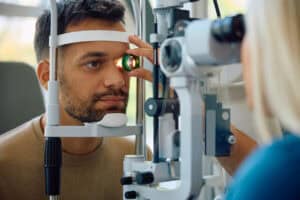
Changes in your vision can signal that your cornea is changing, especially when your prescription shifts frequently or your vision becomes distorted. For progressive keratoconus or certain forms of corneal ectasia, corneal crosslinking may help strengthen and stabilize the cornea.
At Schwartz Laser Eye Center, we provide comprehensive eye care in Scottsdale, Glendale, and Mesa, AZ. Our team includes board-certified ophthalmologists Dr. Jay L. Schwartz and Dr. Orry Birdsong, as well as skilled optometrists.
When Should You Ask About Corneal Crosslinking?
Keratoconus causes the cornea to gradually thin and develop an irregular shape. Corneal crosslinking uses riboflavin and controlled ultraviolet light to reinforce corneal tissue. Your eye doctor may recommend an evaluation when signs suggest that your cornea is changing.
1. Your Eyeglass Prescription Keeps Changing
Frequent prescription changes, particularly increasing astigmatism or nearsightedness, can be associated with changes in corneal shape. Tracking these changes helps your eye doctor assess possible progression.
2. Your Vision Looks Blurry or Distorted
Keratoconus can cause blurry or distorted vision as the cornea becomes thinner and changes shape.
3. You Are Becoming More Sensitive to Light
Increasing light sensitivity is another symptom associated with keratoconus and is worth discussing during an eye examination.
4. Your Astigmatism Is Changing
Changes in astigmatism can provide useful information about corneal stability. Your eye doctor can use detailed measurements to determine if further evaluation is appropriate.
5. Your Contact Lens Fit Keeps Changing
An evolving corneal shape can affect how contact lenses fit and how clearly you see through them. Repeated changes in fitting may prompt a closer examination of your cornea.
6. Your Eye Exams Show Keratoconus Is Progressing
Corneal topography and tomography allow your eye doctor to evaluate corneal shape and look for measurable changes over time. Evidence of progression is an important consideration when discussing corneal crosslinking for keratoconus.
7. You Have Corneal Ectasia After Refractive Surgery
Corneal crosslinking is also used for certain cases of progressive corneal ectasia following refractive surgery.
Schedule a Corneal Crosslinking Evaluation
A comprehensive examination can help determine the cause of your vision changes and whether corneal crosslinking should be considered.
To discuss corneal crosslinking in Scottsdale, Glendale, or Mesa, AZ, schedule a consultation with Schwartz Laser Eye Center. Call (480) 483-3937 or 1(888) 553-3937 to make an appointment.
