



How Diabetes Affects the Retina
Posted on January 30, 2026 by Dr. Schwartz - Diabetic Retinopathy
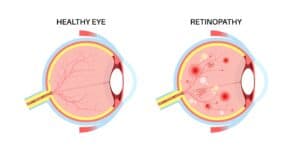 Diabetes has well-documented effects on multiple organ systems, including the eyes. One of the most significant ocular concerns is the impact of elevated blood glucose on the retina, the light-sensitive tissue that processes visual information. At Schwartz Laser Eye Center, serving Scottsdale, Glendale, and Mesa, AZ, our talented ophthalmologists and optometrists evaluate retinal health with advanced imaging technology. This allows us to identify diabetic-related changes as early as possible.
Retinal Structure
The retina contains layers of specialized cells that detect light and transmit visual signals to the brain through the optic nerve. These structures depend on a stable network of small blood vessels to supply oxygen and nutrients. In individuals with diabetes, prolonged exposure to elevated glucose can affect these blood vessels, altering both their function and integrity.
How Elevated Glucose Affects Retinal Blood Vessels
Consistently high blood glucose may contribute to changes in the walls of retinal blood vessels. These vessels may become less efficient at regulating fluid and blood flow, which can influence retinal thickness and clarity. Over time, these vascular changes may lead to the development of diabetic retinopathy, a condition characterized by progressive alterations in the retinal microvasculature.
In the early stages, these changes often occur without noticeable symptoms. Because the retina lacks pain fibers and early visual changes can be subtle, affected people are usually unaware of retinal changes until more advanced findings are present during an eye exam. This is one reason routine diabetic eye evaluations are essential.
Retinal Swelling and Visual Function
Diabetes may also affect the macula, the central area of the retina responsible for detailed vision. When fluid accumulates in this region, it may change how light is focused, leading to fluctuations in visual clarity. Consequently, reading, recognizing faces, or performing tasks requiring fine detail may become more challenging. These fluctuations often vary from day to day, especially when blood sugar levels shift.
Long-Term Effects on Retinal Health
As diabetes continues over many years, cumulative changes in the retinal vessels may increase the likelihood of structural alterations. Detailed retinal imaging, including optical coherence tomography (OCT) and wide-field photography, helps detect early changes long before they interfere with vision. Identifying these findings early allows our clinical team to determine appropriate follow-up intervals and coordinate care with a patient’s primary physician or endocrinologist.
Comprehensive Retinal Evaluations
At Schwartz Laser Eye Center, serving Scottsdale, Glendale, and Mesa, AZ, diabetic retinal evaluations include a review of ocular history, visual acuity testing, dilated fundus examination, and advanced imaging. These diagnostic tools provide a detailed view of retinal layers, vessel integrity, and macular thickness. Regular monitoring helps track changes over time and supports timely clinical decision-making.
For a diabetic retinal evaluation, contact our practice at (480) 483-3937 to schedule an appointment.
